
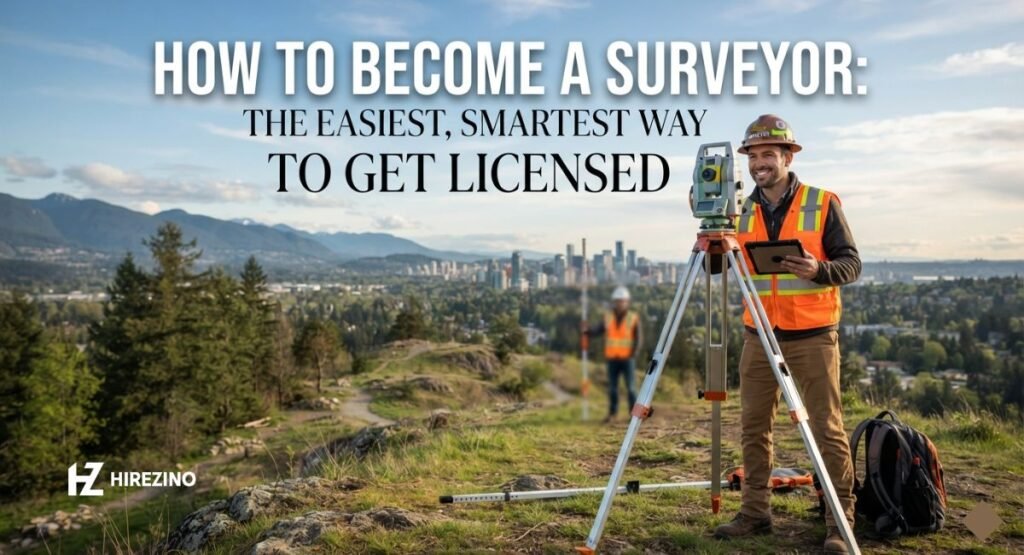
Becoming a surveyor is one of the most popular questions asked about careers in the USA now. This is a job that pays well, gives you real independence and work that matters. Surveyors help to determine the use of land, its mapping and division under the law. The path would be good for those who like math, the outdoors, and solving real problems. However, it may be confusing initially. Exams, degrees and state rules need to be sorted through. This guide makes it easy to follow. You will find out the education requirements, the exams that you need to take and the amount of work experience that you actually need.
People often wonder about a career in surveying and how to become a surveyor without years of schooling. Thankfully, that’s not the case: there are multiple ways in. In some states, training and work experience are the only route to a career. Others prefer a more traditional Bachelor’s degree and quicker route to full licensure. In this article, the two are clearly explained, and you can choose your preferred one depending on your lifestyle. At the end, you will learn step by step how to become a surveyor without any guesses involved. Let’s go step by step and take it together.
What Is a Surveyor? (And What They Actually Do Day to Day)
A surveyor is a skilled professional. They measure land. They mark property boundaries. They collect data for builders, engineers, and government agencies. This is the core of how to become a surveyor first, know the job.
Surveyors use special tools. They work with a theodolite, GPS, and a total station. Some days, they work outside. Other days, they sit in an office. They write reports. They make maps. They check old land records.
Surveyors also work with legal documents. They help set land boundaries for deeds and leases. This job needs strong technical skills. It also needs patience and focus. If you like math and the outdoors, this career fits well.
How Long Does It Take to Become a Surveyor?
It’s a frequently asked question. The response is dependent upon your course. It takes 6-8 years following the entire degree path. This includes school, exams and work experience.
It is OK if you do not pursue a 4-year degree. A no-degree route is allowed in some states. This path relies, on the contrary, on years of on-the-job experience. Often takes longer in the field, but saves time and money on school.
So, what about faster becoming a surveyor? Get a head start as a survey technician. Have practical experience during your studies. This can save you years on your trip. State-by-state rules vary, so be sure to read your local rules.
Choosing Your Path: Degree vs. No-Degree Route
There are two main ways to become a surveyor. The first is the college path. You earn a bachelor’s degree. Then you take exams and gain work experience.
The second path skips the degree. You start as a survey assistant or technician. You learn on the job. Some states let you sit for the Fundamentals of Surveying (FS) exam using years of experience instead of a degree. This is the “easiest way” many people search for.
Here is a quick comparison:
| Path | Time to License | Best For |
| Degree Route | 6–8 years | Students, structured learners |
| No-Degree Route | 8–15 years (varies by state) | Hands-on learners, faster job entry |
Both paths lead to the same goal: a full surveyor license. Pick the one that fits your life.
Learn about degrees and coursework for getting the right education and accreditation.

Most people have the natural question, “How can I become a surveyor in school?”. Typically, a bachelor’s degree in surveying or a related subject is required for entry into the profession. Check for an ABET-accredited program. It’s a requirement for many states to license.
Courses include such things as surveying techniques, cartography, physics, geology, and calculus. A few schools have a degree in geomatics. Very close to a surveying degree and it works well, too.
An associate degree can prove to be useful if you don’t want to pursue a bachelor’s degree. It is accepted for credit in some states. Additional work experience might still be required. Community college may have surveying technology programs. These may be more affordable and quicker than going to a four-year college.
Passing the Fundamentals of Surveying (FS) Exam
The Fundamentals of Surveying (FS) exam is your first big test. It is offered by NCEES. Most students take it near graduation. Passing this exam makes you a surveyor-in-training, often called SIT or LSIT.
This exam covers math, geodesy, and basic surveying rules. Study guides are widely available. Many candidates study for two to three months before the test.
Some states offer an FS waiver. This means you may skip the exam. This usually applies if you have many years of work experience or hold another related license, like a civil engineering license. Always check your state board rules. This step is a key part of how to become a surveyor the right way.
Gaining Hands-On Experience Under a Licensed Surveyor
After the FS exam, you need real work experience. You must work under a licensed surveyor. This person supervises your work. They sign off on your training.
Most states ask for two to six years of experience. This depends on your education level. A bachelor’s degree can lower the required years. No degree usually means more years in the field.
This step teaches real skills. You learn boundary surveying, construction surveying, and how to use tools like GPS and total stations. You also learn how to write legal land reports. This hands-on time is often the longest part of learning how to become a surveyor. Be patient. It pays off with a strong resume and real skill.
Passing the Principles and Practice of Surveying (PS) Exam
The Principles and Practice of Surveying (PS) exam is the second NCEES test. This exam is harder than the FS exam. It tests real-world surveying knowledge.
You usually need at least four years of experience before you can sit for this exam. It covers legal issues, boundary law, and advanced technical topics. Many people study for three to four months.
Passing the PS exam is a huge step. It shows you are ready for full licensure. Combined with the FS exam, this is the national standard for how to become a surveyor in most US states. After this, only your state exam remains.
Getting Your State License: Requirements That Vary by State
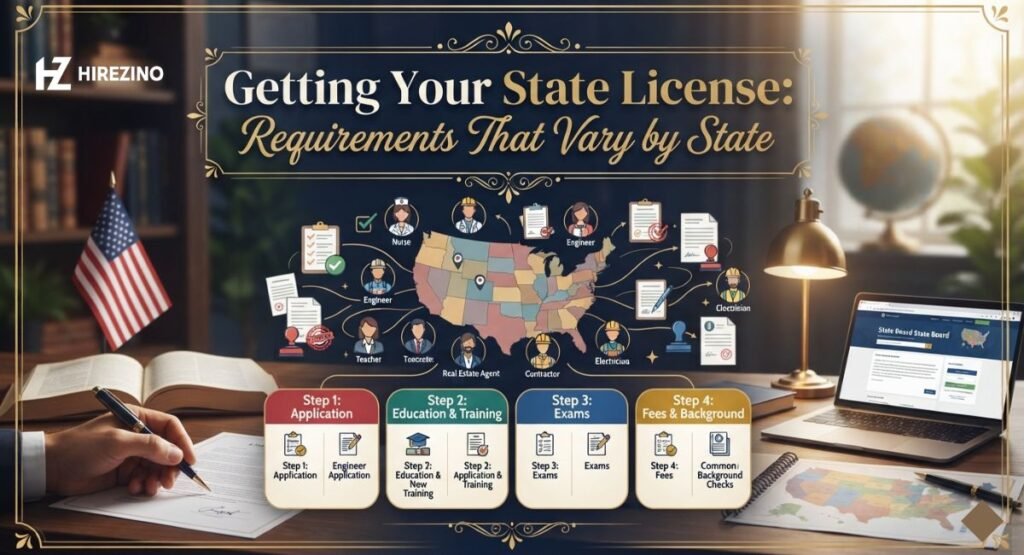
Every state has its own rules. After passing the FS and PS exams, you must pass a state-specific exam. Some states also test state laws and rules, like California’s Professional Land Surveyor exam.
You will also need to submit proof of your work experience. Most states want documents signed by your supervising licensed surveyor. Fingerprinting and background checks are common too.
Once approved, you receive your surveyor license. This is often called a PLS (Professional Land Surveyor) title. Now you can sign legal documents. You can also lead your own survey projects. This final step completes the full path of how to become a surveyor in the United States.
Skills, Tools & Specializations Every Surveyor Should Know
Surveyors need more than book knowledge. They need strong technical skills. They also need good communication and teamwork. You will work with engineers, builders, and clients often.
Common tools include the theodolite, GPS, robotic total station, and ground-penetrating radar. Learning software for maps and drafting also helps a lot.
There are many types of surveying to explore:
- Land surveying – marking legal property lines
- Construction surveying – guiding building projects
- Geodetic surveying – measuring large earth areas
- Hydrographic surveying – mapping rivers, lakes, and coasts
- Mine surveying – mapping underground tunnels
Picking a specialty can boost your pay and open new career doors. Many surveyors choose their focus after a few years in the field.
Conclusion
There is no need to be confused when learning how to become a surveyor. You now have both paths in your knowledge! The degree route is structured and is usually faster to license. The no-degree pathway allows you to learn by doing and in the real world. Either way, it’s done in the same way: first pass the exam Fundamentals of Surveying (FS), then get the experience working with a licensed surveyor, and then pass the exam Principles and Practice of Surveying (PS). Then it’s your state license. Each state has its own regulations, so please verify prior to beginning. This career is a patient career. It also celebrates those with a passion for math, the outdoors, and problem solving in the real world.
So, if you’re still wondering how to become a surveyor, do it small and simple. Discuss with a local survey company. Inquire about entry level positions or internships. The real life lesson is a more powerful one than any textbook. Establish objectives and record hours needed for exams. The first few years are difficult, but the rewards are great, according to many surveyors. Having a surveyor’s license opens up a world of consistent work, good compensation, and career freedom. Now is the time to get started and you will be that much closer to becoming a fully licensed surveyor. If you’re exploring careers broadly, here’s another resource.
FAQs
How long does it take to become a surveyor?
It usually takes six to eight years with a bachelor’s degree. The no-degree route can take longer, often eight to fifteen years, depending on your state.
Can you become a surveyor without a degree?
Yes, many states allow this. You need years of work experience under a licensed surveyor plus passing scores on the PS and FS Exams.
What exams do you need to pass to become a surveyor?
You need the Fundamentals of Surveying (FS) exam and the Principles and Practice of Surveying (PS) exam. Most states also require a state-specific exam.
How much does a surveyor make?
Entry-level surveyors typically earn around $45,000 to $55,000 a year. Licensed surveyors with experience can earn $70,000 or more.
What skills does a surveyor need?
Surveyors need strong technical skills, math ability, and comfort using tools like GPS and a total station. Communication skills also matter a lot.
Is being a surveyor a good career?
Yes, it offers steady demand, solid pay, and real independence. It suits people who enjoy both fieldwork and detailed office tasks.
What is the difference between a surveyor and a survey technician?
A survey technician works under supervision and is not yet licensed. A licensed surveyor has passed all exams and can sign legal documents.
Pingback: Outsourcing vs. In-House IT Team: The Costly Mistake Most Businesses Make