

Ethical ways to contact employees using company directories is something more and more employees are having to ask. However, as companies expand, the employee directory takes the place of hallway conversations and they become lost. Just because you know someone’s contact information doesn’t mean you can contact them in any manner. Knowing how to use company directories to reach employees ethically involves knowing when to reach out and when not to. It’s not about being very strict with the rules just for the sake of it. It’s about respecting time, privacy of others and their preferred methods of contact. A directory is created to enable teams to connect, not to become a spambot or a place for ill-thought-out messages. This is an important skill for every employee, whether you’re a new or seasoned employee. It affects your image and the level of confidence you will be given when you send your name to an email.
This guide offers simple and pragmatic steps to the ethical use of company directories to reach employees. You’ll discover what information directories are generally used for, the importance of consent and tips on things to avoid to prevent loss of trust. There will also be a discussion of the basics of data privacy, outreach for remote teams, and internal directories vs public directories. At the end, you’ll have an easy-to-follow and respectful way to communicate in the workplace — to keep you professional, compliant, and considerate every time you communicate.
What Is a Company Directory and Why It Matters for Employee Contact
A company directory is a list of people who work at your organization. It usually has names, job titles, departments, and contact information. Some directories also show a photo, a manager, or direct reports. This tool helps you find the right person fast. But knowing how to use company directories to contact employees ethically starts with understanding what the tool is for.
A directory is not a marketing list. It’s not a place to collect emails for spam. It’s built for real work needs. Learning how to use company directories to contact employees ethically means using it only for its true purpose. Think of it as a map, not a shortcut. When you respect that boundary, you build trust. You also avoid HR complaints. This is the first step toward respectful workplace communication.
What Information Company Directories Typically Include
Typical employee directories have similar fields. This is why they are a convenient way to search and use throughout a company.
Here are the typical contents you’ll find:
- Name and job title
- Department and team
- Name of the individual and their contact details (email, telephone).
- Where they work – office or work place
- Manager and direct report.
- A biographical information, photograph or list of skills may be included at times.
If you know what is contained in a directory, you can use it properly. There are public fields. Others are private and restricted. One part of the art of using company directories to reach workers ethically is to know what information to use and which to leave alone. Not all fields are the ones you’re going to put on a poster about. An internal phone number doesn’t mean that it is an invitation for cold calling. Knowing the difference will keep you and your team mates out of trouble when calling workers during the day, and is essential in using the company directory to reach workers ethically.
Why Ethical Use of Employee Directories Builds Trust (Not Just Compliance)
Being ethical isn’t just about following rules. It’s about how people feel when you reach out. When you know how to use company directories to contact employees ethically, people trust you more. They answer your messages faster. They see you as respectful, not pushy. This workplace trust is hard to build and easy to lose.
Companies that train staff on how to use company directories to contact employees ethically see fewer complaints. Employees feel safer sharing their info in the directory. This creates a stronger employee experience overall. Trust also boosts internal communication. People respond better when they know you’ll use their contact details with care. Over time, this respect shapes your company culture. Small habits, like asking before a cold outreach, add up. That’s why ethical use matters more than most people think.
Key Features That Support Respectful, Permission-Based Contact
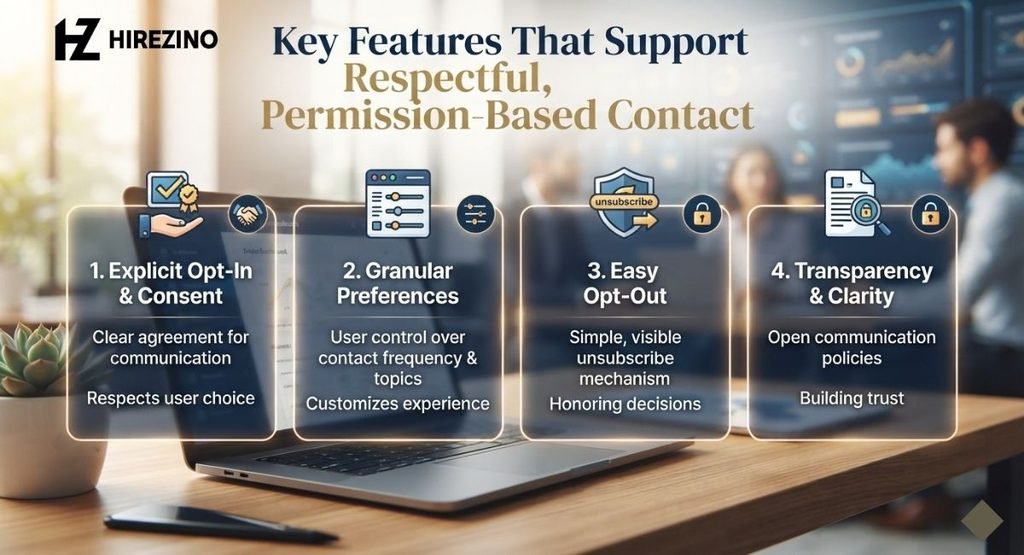
Modern directories have features that help you stay respectful. Search filters, availability status, and skill tags let you find the right person without guessing. Some tools also show preferred contact methods. This helps you reach out the way someone actually wants to be reached.Search filters and department tags make this easy for example, quickly locating an accounting specialist instead of guessing who handles a finance question.
These features aren’t all about speed. They also assist in learning how to contact employees ethically in a genuine manner, using company directories. If someone says “do not disturb” for instance, then listen for that. If a profile specifies a desired contact method as “Chat” do not call, as the person likely prefers to chat. Ethical outreach is easy with good directory tools. They provide you with the background you need before you hit send. These can be used effectively and are an essential component of the ethical way to use company directories to reach employees without being intrusive.
How to Contact an Employee Through a Company Directory: Step-by-Step
Here’s a simple process for reaching out the right way:
- Confirm your reason. Make sure the contact is work-related.
- Check the directory entry. Look for a preferred contact method or availability note.
- Use official channels. Stick to company email, chat, or phone listed in the directory.
- Keep your message short and clear. State who you are and why you’re reaching out.
- Respect a no-reply. If they don’t respond, don’t push repeatedly.
This is how to use company directories to contact employees ethically in practice. It’s not complicated. It just takes a little thought before you act. Skipping steps, like using a private number found elsewhere, breaks trust fast. Following this process protects the other person’s time and privacy. It also protects you from looking careless or invasive. When in doubt, ask yourself: would I be okay if someone contacted me this way? That question is often the simplest guide to how to use company directories to contact employees ethically.
Do’s and Don’ts of Using Employee Contact Information
A quick list makes ethical outreach easy to remember.
| Do | Don’t |
| Use the directory for work-related outreach | Use it for personal or sales messages |
| Respect availability status | Message someone marked as unavailable |
| Keep contact details confidential | Share someone’s info with outside parties |
| Ask before adding someone to a group chat | Add people without consent |
| Use official channels only | Use personal social media to reach out |
These simple do’s and don’ts sum up how to use company directories to contact employees ethically. Most mistakes happen by accident, not bad intent. People forget that directory data is still personal information. Treat every entry with care, even if it feels like “just an email.” Following this table daily builds a habit. Over time, it becomes second nature. That’s the real goal behind how to use company directories to contact employees ethically — making respect automatic, not something you have to think hard about.
Data Privacy, Consent, and Legal Considerations for Directory Use
Data privacy isn’t optional. Employee directories hold personal information, and laws like state privacy rules in the USA protect that data. Misusing it can lead to real legal trouble. Companies must limit access to sensitive fields and train staff on proper use.
Consent matters too. Some employees may not want their number listed, or may prefer email only. Respecting these choices is part of how to use company directories to contact employees ethically. Before you export or share directory data, check your company’s policy. Many organizations restrict downloading full contact lists. Breaking that rule can trigger compliance issues, even if you meant no harm. Good data protection habits protect the whole company, not just you. This is why how to use company directories to contact employees ethically should be part of every new hire’s training, not an afterthought.
Reaching Remote or Cross-Department Employees the Right Way

Remote teams rely on directories more than office-based staff. Without hallway chats, the directory becomes the main way to find people. This makes how to use company directories to contact employees ethically even more important for distributed teams.
When reaching a cross-department contact, add context. Say who referred you, or why you’re reaching out. This helps remote employees trust your message faster.Do not use push tones unless they are push. Respect time zone as defined in the profile. Even though it’s normal for you, a message sent at 2 am their time might seem intrusive. These little tips will teach you how to get in touch with employees ethically regardless of the location. Avoid awkward messages and lack of cooperation between teams by having remote-friendly outreach.
Employee Directory vs. Public Contact Lists: What’s Appropriate to Use
Not all contact data is the same. An internal directory is built for coworkers. A public list, like a scraped LinkedIn export or a purchased contact database, is different. Mixing the two can cause real harm.
Learning how to use company directories to contact employees ethically means knowing this line clearly. Internal directories are meant for work needs inside the company. Public contact lists often lack consent, and using them for outreach can feel invasive or even break privacy laws. Stick to the internal tool when the task is internal. If you need external outreach, use proper sales or recruiting tools with clear opt-in rules. Confusing these two systems is one of the biggest ethical mistakes people make. Knowing the difference is central to how to use company directories to contact employees ethically at every level of a company.
Conclusion
How to use company directories to get a hold on members of your company, in an ethical manner, is a skill that is essential for every professional in today’s world. Developing a directory is a great tool, but if it is not treated properly. You must respect consent, use official channels, and always verify the availability of the person before contacting. These are minor things which can help keep your coworkers private and make sure your company’s data protection standards are upheld. The same applies whether you’re talking to a teammate within your department or a member of a remote team that is across time zones: Think before you communicate. This is the true key to contacting employees ethically through company directories and it’s applicable in any workplace, regardless of its size.
Ethical outreach is simple in the end. Simply requires some awareness and respect for the other person on the end. If you know how to use company directories to get in touch with employees ethically, you establish trust in the workplace, stay compliant with regulations and make the workplace welcoming for employees to share their contact details. Make this practice part of your daily routine, and share it with your team. The better the people in your business know how to use the company directory to reach out to employees with respect, the better the whole company will be.
FAQ’s
What does it mean to use a company directory ethically?
It means only using employee contact details for legitimate work purposes, respecting privacy settings, and never sharing information outside the company without consent.
Is it okay to contact any employee listed in a company directory?
Not always. You should have a clear work-related reason before reaching out, and you should respect any availability status or preferred contact method listed on their profile.
Can I use a company directory to send marketing or sales messages?
No. Company directories are meant for internal, work-related communication, not for marketing, sales pitches, or personal outreach.
What’s the difference between an internal directory and a public contact list?
An internal directory is built for coworkers with consent-based data, while a public contact list, like a scraped LinkedIn export, often lacks proper consent and shouldn’t be used the same way.
How can I contact a remote employee respectfully through a directory?
Check their time zone and availability status, explain who you are and why you’re reaching out, and use the official contact channel listed in their profile.
What should I do if an employee doesn’t respond to my message?
Respect their silence and avoid repeated follow-ups. If it’s urgent, contact their manager or use an official escalation channel instead.
Why does ethical directory use matter for company culture?
It builds trust, reduces privacy complaints, and helps employees feel safe knowing their contact information is treated with respect.