
One of the most valuable interviewings tips a hiring team can learn today is how to do a panel interview. This format is used by more US companies today, because it provides more information about each candidate. Rather than having one interviewer interview, a hiring manager, a peer, and a HR person are in the same room and all ask questions. This will ensure that you get things that one interview may miss. It also accelerates the hiring process as you are not required to have multiple meetings to decide. If you’re still wondering how to do a panel interview the correct way, then you are ahead of many other companies that simply wing it.
In this guide, you’ll learn about the process of a panel interview step-by-step, from the beginning to the end. You will create the appropriate interview panel, develop good structured interview questions, and give a fair rating to candidates with a common interview rubric. We will also be learning how to minimise unconscious bias and enhance the candidate’s experience as we go. Once you’ve finished reading, you’ll know how to run a fair, organized and effective panel interview for your team, your candidates and your company’s long-term hiring success.
What Is a Panel Interview and Why Employers Use It
The panel interview is when two or more people are involved in the interview. It is a contrast to a group interview, which is an interview with multiple interviewers and multiple candidates. The first step to learn how to interview a panel is to understand the basic setup. Typically, the panel will consist of a hiring manager, a peer and an HR professional. At times, a search committee is employed. This will provide you with more perspectives on the same applicant. Also it lessens the unconscious bias because one person is not the only one through whose opinion everything is decided.
This is the preferred style of interview by most US employers today, as opposed to a single interview. You’ll save time as you do not need to have five meetings. It also makes the process of hiring easier, because each panelist will concentrate on a different skill. If you’re not yet used to doing a panel interview, be aware this is helpful only when planned. Panels can become disorganized and unfair to the candidates if there is no structure. The following sections will demonstrate just how to do that.
How to Prepare for a Panel Interview: Job Description, Rubric, and Candidate Profile
The key to a successful panel interview is good preparation. Have a well-defined job description. Include objectives rather than a long list of skills. All the panelists must receive a copy prior to the interview. They also require a resume of the candidate and notes on the requisition. This ensures everyone is on the same page. If not, the panel interview will be a guessing game and the panelists will ask random questions – there will be no strategy.
Then, create an interview rubric. This is a scale which rates each answer in the same way for all candidates. A common rubric provides score for candidates to be objective and easier to compare. Many of the best companies in the USA also come up with an interview script beforehand. This script provides the actual questions each of the panelists will ask, in a structured format. Your team will save hours in the debriefing if they know how to run a panel interview using some of the best preparation resources available. It also prevents you from being held liable because all candidates will be asked exactly the same basic questions.
How to Build the Right Interview Panel (Roles, Size, and Diversity)
As important as the questions are the right people. In learning how to do a panel interview, try to get three to five panelists. By invitation, too many people are like an interrogator. Ideally, the mix should consist of the hiring manager, a peer, and one of the other team members the candidate will be collaborating with. This is known as cross-functional fit and reveals how well a person will fit within the company. Panel-based evaluation isn’t just useful for interviews — it also helps when you’re making bigger staffing calls, like deciding between an in-house or outsourced IT team.
Diversity is also one of the important aspects of fair panel interview. Aim to have panelists who reflect diverse genders, backgrounds and experience. This will help to minimize unconscious bias and provide a fuller profile of the applicant. A diverse panel also contributes to diversity in who gets hired throughout your company. But keep in mind, it’s not about the size of the panel. The target is the right hand panel. In talent acquisition, you can’t have too many.In talent acquisition, quality trumps quantity every time.
How to Train and Brief Your Interview Panelists Before the Interview
Even good panelists need training. This step is often skipped, but it is key to how to conduct a panel interview smoothly. Before the interview, tell each panelist which questions to avoid. Some topics can create legal trouble for your company. Panelists should also know the tone to set. A warm, calm room helps the candidate relax and give real answers. This matters a lot in interviewing candidates, since panel settings can feel more stressful than one-on-one talks.
A short briefing also improves how to conduct a panel interview results. Decide who opens the interview and who closes it. Assign topics so questions do not repeat. One panelist can cover technical knowledge questions. Another can focus on soft skills or interpersonal skills. This plan keeps the conversation smooth. It also stops the candidate from hearing the same question twice, which can feel unprofessional and waste valuable interview time.
How to Structure the Panel Interview Questions and Sequence
Order matters when you plan how to conduct a panel interview step by step. Start with light, easy questions. These are called rapport-building questions, and they help the candidate feel comfortable early on. Next, move into questions about past work and experience. Then shift into deeper topics like process and problem solving. This flow keeps the energy natural instead of jumping straight into hard questions.
| Interview Stage | Question Focus |
| Opening | Rapport and background |
| Early-Middle | Past experience and projects |
| Middle | Work process and problem solving |
| Late | Technical knowledge |
| Closing | Soft skills and teamwork |
A clear progression of steps is one of the easier and low-effort improvements you can make to panel interview structuring. Panelists also benefit from a definite order of steps, since everyone knows the purpose of each step. The candidates also appreciate that approach as well. This structure is also very beneficial when it comes to evaluating the candidates fairly throughout the process. This structure is also very effective in ensuring that the process is complete from step one all the way to the last.
Types of Panel Interview Questions to Ask (Rapport, Behavioral, Technical, and Soft Skills)
Often, the key to having a successful panel interview and getting real answers is knowing what to ask. Behavioral – questions involve past actions such as: “Tell me about a time you solved a difficult problem. Answers to these questions reflect actual work habits, not simply opinions! Technical Knowledge questions assess whether or not the candidate can perform the actual task. Throw in some process questions, such as what a normal workday would look like for the candidate.
- Rapport: “What is something you are most proud of from your career?
- Behavioral: “Tell about a problem you had and how you resolved it.
- Technical: “What made you decide to stay up to date on your field?”
- Soft skills: “Describe a teamwork experience that was successful for you.
This combination is one that is proven to be a natural and not a robotic panel interview. Each question type allows panelists a different lens into the candidate. They create a complete picture of skills, aptitude and personality for the job.
Panel Interview Techniques for Reducing Bias and Ensuring Consistency
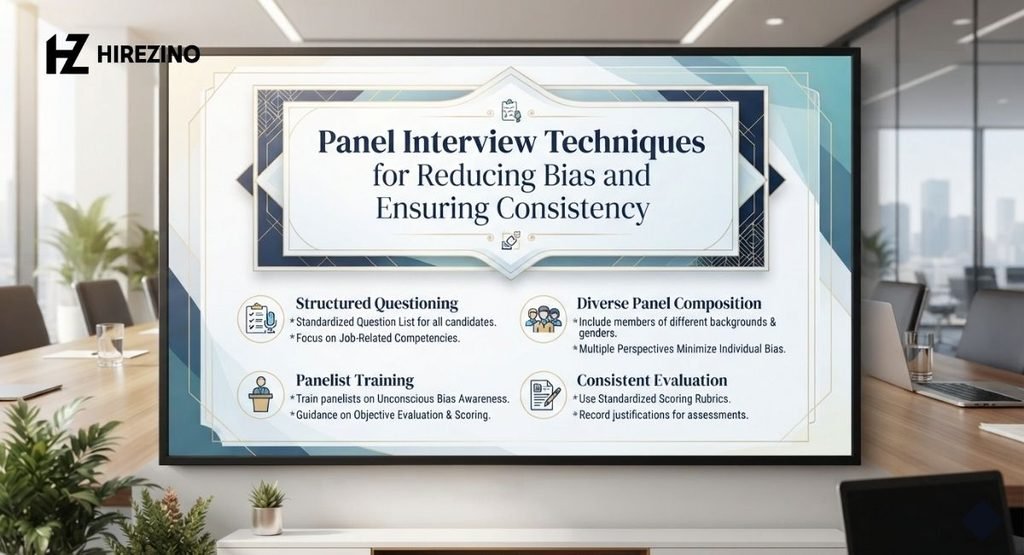
How to conduct a panel interview correctly is important because of fairness. It is hard to know how to conduct a panel interview correctly so as to avoid bias. A simple way to answer how to conduct a panel interview correctly would be to create a list of fundamental questions and ask all candidates these questions. This would create a structured interview approach. The views and follow-up questions of the interviewer should differ, however, the main questions should remain the same.
Picture what a strong answer would look like for the main questions and align your fellow panelist interviewers to that same end as part of how to conduct a panel interview. An important part of how to conduct a panel interview reliably is developing a scoring rubric with a clear scoring system, and following it honestly and rigorously. If your panels consistently score in the same way, your hiring process becomes easier to defend.
How to Debrief and Compare Candidate Assessments After the Interview
This exit guidance is not the final step. Developing the ability to conduct a panel interview and close it out with success also requires exit guidance. After every interview, panelists should meet to debrief for a short time while the interview is still fresh in their minds. It is better to meet to discuss the candidate right after the interview than to meet after a few days as weaker, foggier notes will be the only outcome.
After every final candidate has been interviewed, a much longer meeting should take place to discuss the results. Review the scoring of the rubric in this meeting as a part of how to conduct a panel interview. During this meeting, plans for the reference checks can be developed as well, if applicable. A frank, open discussion of the finalists should provide panelists with the rationale needed for a successful hire.
Panel Interview Best Practices for a Better Candidate Experience
Candidates will recognize a thoughtfully designed candidate journey and panel interview process, even when they aren’t selected. Determine what you know about the candidates that are visiting your interview panels. Remember to mention the reasons for the interview panel and share an interview schedule with the candidate in advance. Candidate anxiety decreases when they know what to expect and can prepare themselves for the individual members of the interview panels.
Try to create a welcoming environment by introducing the panel members by their name and role. Explain why members of the interview panel are in attendance. Even in instances where the candidate is not offered employment, taking care during the interview process can create a positive impression. The positive impression may motivate candidates to refer other qualified candidates, and may lead future hires to purchase the product or service you offer.
Conclusion
Accepting the right way to deal with a board meeting will change the way your company hires. More than just filling the room with more people. It’s about creating a transparent, honest platform that provides you with honest insight into all candidates. Each section of this guide is designed to help you make informed and confident hiring decisions – whether you’re writing an effective job description, or designing a more effective interview rubric. By managing the panel interview process appropriately, unconscious bias is minimized, the hiring process is consistent and each member of the panel has a clear role to complete. Getting to grips with a panel interview in this way removes the guesswork and starts to enable you to hire with facts rather than your own opinion.
The great thing is that this does not take any additional time once it is established as a habit. These three are all simple tools that keep on multiplying their benefits: briefing, rubric and question order. Companies that understand how to conduct a panel interview will be better equipped at team building, the candidate experience, and hiring fewer bad candidates next time around. These are the same steps you can take if you’re a small business owner, or as an individual part of a large hiring committee. Make one small step first: for instance, a common scoring sheet. As time goes on, you’ll realize that knowing how to run a panel interview is one of the most straightforward means to enhance your overall talent acquisition approach.
FAQ’s
What is a panel interview?
A panel interview is when two or more interviewers meet with one candidate at the same time. It usually includes a hiring manager, a peer, and someone from HR or another team.
How many people should be on an interview panel?
Most experts recommend three to five panelists. More than that can feel like an interrogation and make candidates give shorter, guarded answers.
How long does a panel interview usually take?
Panel interviews typically last 45 minutes to an hour. This gives each panelist time to ask questions without rushing the candidate.
What is the difference between a panel interview and a group interview?
A panel interview has multiple interviewers and one candidate. A group interview has multiple candidates being interviewed at the same time.
How do you reduce bias in a panel interview?
Use the same core questions for every candidate and score answers with a shared rubric. This keeps evaluations consistent and fair.
Who should be on a panel interview?
A good panel usually includes the hiring manager, a peer the candidate would work with, and someone from a related team or department.
How do you prepare candidates for a panel interview?
Send them a short agenda beforehand listing who they will meet and each person’s role. This helps candidates feel ready and gives sharper answers.
Pingback: Do You Get Paid for Bereavement? The Ugly Truth by State (2026)