
Smart companies stay one step ahead of talent issues with strategic workforce planning. Rather than panic-hiring, businesses engage in strategic workforce planning, a process that involves examining the business conditions over a period of many years. They learn how to use workforce analytics to identify trends, early on. They also conduct a skill gap analysis to identify areas of vulnerability that could become a problem. This way, both costs are saved and teams remain robust. If there is no plan, then companies could end up losing key staff or vital skills. This is the reason more leaders are prioritizing the strategic workforce planning process in 2026.
All businesses rely on individuals to expand. Strategic workforce planning aligns your talent decisions to your larger business goals. It uses workforce forecasting to predict future needs. It also facilitates a more effective succession process – leadership gaps are never a surprise. This article will take you through the entire process, simply and sequentially.
What Is Strategic Workforce Planning?
Strategic workforce planning is the process of matching your people to your business goals. It looks years ahead, not just months. Companies use it to spot skills gap analysis early. This helps them avoid sudden talent shortages.
Unlike simple headcount planning, strategic workforce planning looks at the full picture. It uses workforce analytics to study trends. It also uses workforce forecasting to predict future needs. This makes strategic workforce planning a smart, data-driven approach. It connects HR decisions directly to business strategy. Without it, companies often hire too late or hire the wrong skills.
The difference between Strategic and Operational Workforce Planning.
It’s often taken for granted that employees know strategic workforce planning is not just about filling vacancies on the spot. They’re not synonymous. SWP is a strategic approach that takes a long, long view. Operational planning for only the coming few months. These are both necessary, but have different purposes.
The table below shows the key differences. Apply it to gain insight into the strategic workforce planning context in your organisation.
| Aspect | Strategic Workforce Planning | Operational Workforce Planning |
| Time frame | Years ahead | Weeks to months |
| Focus | Capability building and talent strategy | Daily staffing needs |
| Data used | People analytics, labor market trends | Current schedules and budgets |
| Owner | Business leaders and HR together | HR operations teams |
Both plans should work together. Strategic workforce planning sets the direction. Operational planning handles the details.
The reasons why Strategic Workforce Planning is important in 2026.
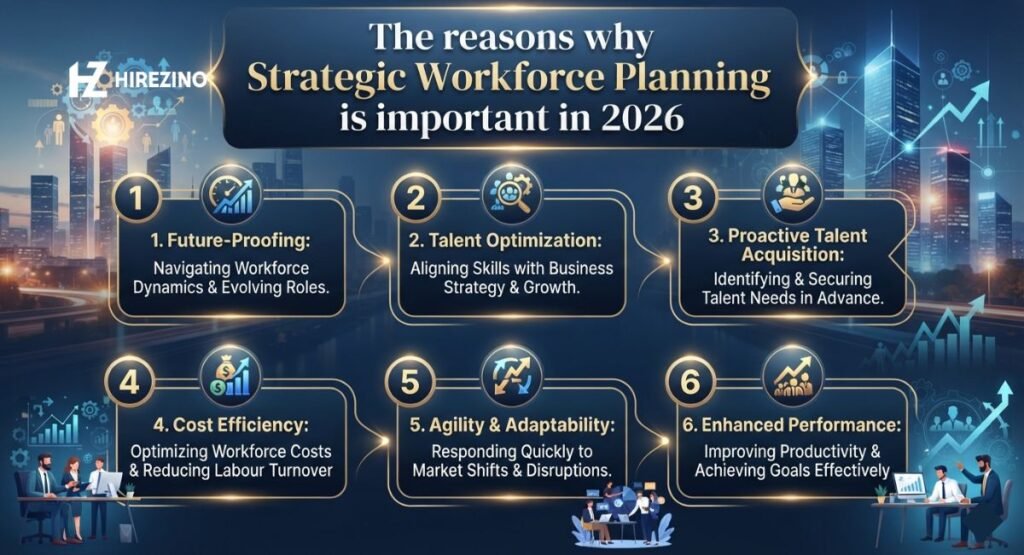
The job market has been evolving quickly. AI is taking over some jobs. There’s a rise in other jobs too. That’s why strategic workforce planning is a growing concern in 2026. Those that do not use it may be outdone by their rivals.
You have three major challenges you can address with strategic workforce planning. First, it addresses the problem of declining labor force resulting from changes in the labor market landscape. Second, it equips your staff with their skills and automation. Thirdly, it safeguards your budget by optimizing workforce. Firms with effective strategic workforce planning make better hiring decisions. They save money on hiring for emergencies. They also help retain employees, leading to better retention and cost savings throughout the business.
The Strategic Workforce Planning Process: A Step-by-Step Framework
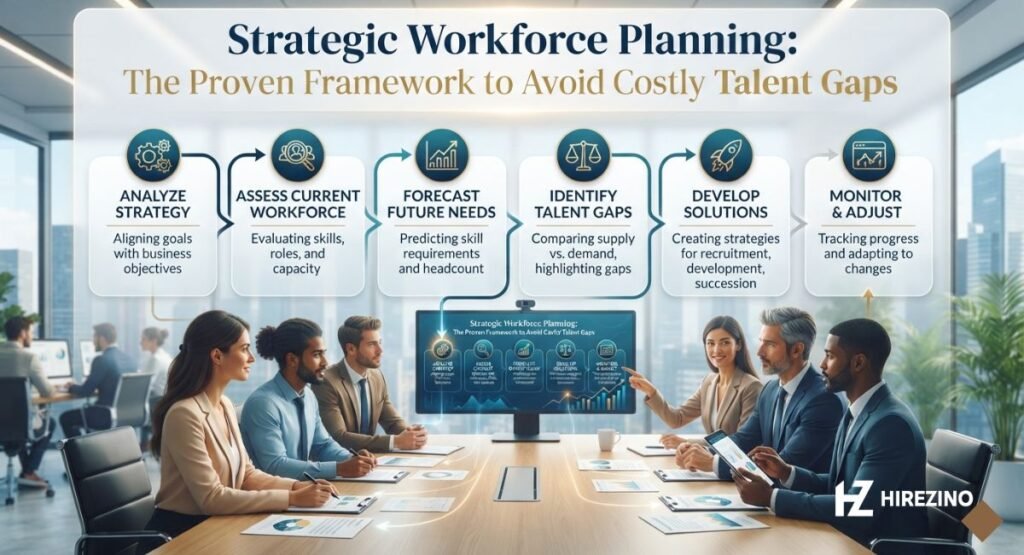
It doesn’t have to be difficult to put together a strategic workforce planning process. It takes a few straight paths. Building on each other step. This makes the forecasting, planning and management of strategic workforce more manageable in the long term.
Here is a simple step-by-step guide:
- Determine your business objectives. Be familiar with the direction the company is headed.
- Know your existing employees. Look at workforce data to identify what you have.
- Forecast future needs. Use demand & supply forecasting to forecast gaps.
- Find the gaps. Make comparisons between what you have and what you need.
- Make a plan of action. Choose to hire, train or automate.
- Review often. Review the strategic workforce planning process annually.
By doing these, you make your plan simple and useful. It also ensures that your team is oriented towards the real objectives, and not towards guesswork.When you’re ready to fill critical roles fast, running a group interview lets you evaluate multiple candidates at once, keeping your strategic workforce planning timeline on track.
Key Components of a Strategic Workforce Planning Model
A strong strategic workforce planning model has a few core parts. These parts work together to give you a full view of your talent needs. Skipping any part can weaken your strategic workforce planning results.
The main components include scenario planning, which tests different future outcomes. It also includes succession planning, which prepares leaders for key roles. Organizational design is another piece. It looks at how teams and job family structures should change. Finally, strategic workforce planning models rely on business strategy alignment. This means every workforce decision connects back to company goals. When these parts work together, your plan becomes much stronger and easier to act on.
Common Talent Gaps Strategic Workforce Planning Helps You Avoid
Talent gaps can hurt a business fast. Strategic workforce planning helps you catch these gaps before they cause damage. Many companies wait too long to notice a problem. By then, it is expensive to fix.
Some common gaps include missing technical skills, weak leadership pipelines, and poor succession planning. Strategic workforce planning also helps avoid attrition spikes in critical roles. It flags roles that are hard to fill in advance. This gives you time to act through reskilling or upskilling programs. Companies that use strategic workforce planning well can turn a slow-building crisis into a manageable project. This saves money and keeps teams running smoothly.
The best practices for Strategic Workforce Planning.
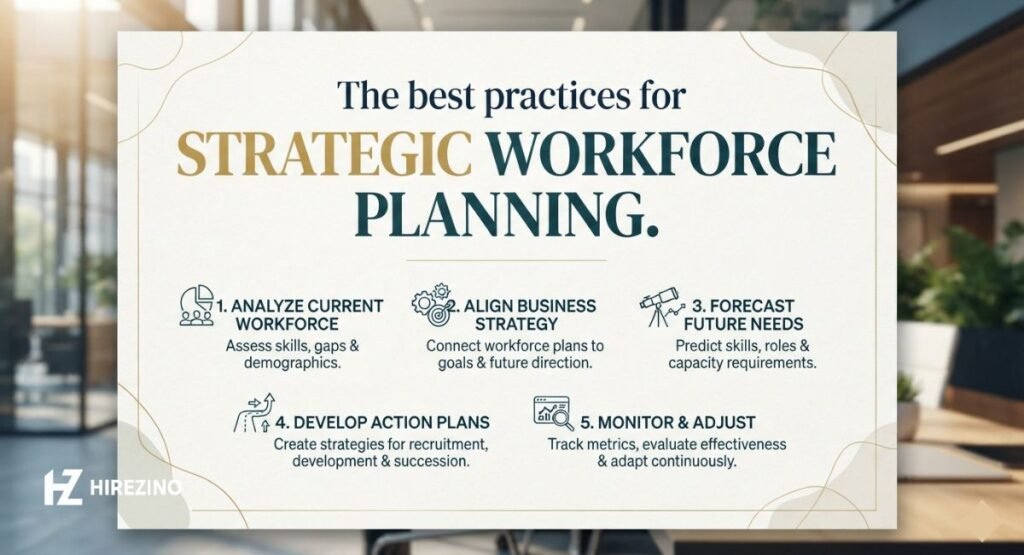
There are some good habits of strategic workforce planning. These practices distinguish the successful companies from the struggling ones. Practicing best practices can help you make strategic workforce planning efforts more effective and repeatable annually.
The following are the best practices to follow:
- Ensure all plans are connected to your HR strategy and business objectives.
- Do not make assumptions or use outdated standards.
- Incorporate finance and leadership into strategic workforce planning.
- Pay attention to capability building rather than numbers of people involved.
- Reevaluate plan at regular intervals.
These simple practices help you have an accurate strategic workforce planning process. They also assist your team to believe in the plan and take action.
Strategic Workforce Planning Tools and Software to Consider
The right tools make strategic workforce planning much easier. Manual spreadsheets can work for small teams. But most companies need software built for this job. Good tools save time and reduce errors in strategic workforce planning.
Look for tools that offer strong workforce analytics and forecasting features. The best strategic workforce planning software connects HR data with finance data in one place.It should also be capable of scenario planning try out various scenarios. Common solutions include Visier, Planful and Workday Adaptive Planning. They both have their own pros, so research features before selecting. The right software can make strategic workforce planning a more transparent, data-driven process.
Some of the typical pitfalls of strategic workforce planning are listed below.
All good teams make strategic workforce planning mistakes. These errors can cost you time and money. If you’re aware of them, you can prepare for the potentially high price of a setback.
A mistake committed by many is to view SWP as a one-time project. Does not need to be a one-time occurrence. Another mistake is relying only on HR. Strategic workforce planning works best when finance and business leaders are involved too. Some companies also chase perfect data instead of taking action. This slows everything down. Finally, many skip regular reviews. Without updates, your strategic workforce planning plan becomes outdated fast. Avoiding these mistakes keeps your plan useful and accurate over time.
Conclusion
Smart companies stay ahead of talent problems by engaging in strategic workforce planning. Strategic workforce planning isn’t something businesses do in a panic, it’s a long-range look at the future that involves hiring. They analyze workforce data and identify patterns in the early stages. They are also able to take advantage of skills gap analysis to identify weaknesses before they are a problem. This way it is more cost effective and helps to maintain team strength. If not, companies can risk losing valuable employees and/or the skills. Strategic workforce planning is a top priority for more leaders, which is why in 2026.
People are the key to growth for every business. Strategic workforce planning is about tying your talent decisions to the larger business decisions. It employs labour force forecasting as a tool to anticipate future needs. It also enables smooth succession planning, thus no vacancy of leadership surprises you. This guide will take you through the entire process step by step, and explain it in simple terms.
FAQ’s
What is strategic workforce planning?
Strategic workforce planning is the process of aligning your workforce with long-term business goals. It uses data to forecast future talent needs and close skills gaps.
How is strategic workforce planning different from workforce planning?
Regular workforce planning covers short-term staffing needs. Strategic workforce planning looks years ahead and connects talent decisions to overall business strategy.
Why is strategic workforce planning important?
Strategic workforce planning helps companies avoid talent shortages, control hiring costs, and prepare for changes like automation. It turns reactive hiring into a proactive strategy.
What are the main steps in strategic workforce planning?
The process includes setting business goals, studying current talent, forecasting future needs, finding gaps, and building an action plan. Strategic workforce planning should be reviewed every year.
Who is responsible for strategic workforce planning?
Business leaders and HR share ownership of strategic workforce planning. Leaders set strategic priorities, while HR provides data and analytical support.
What tools are used for strategic workforce planning?
Popular tools include Visier, Planful, and Workday Adaptive Planning. These platforms support strategic workforce planning with forecasting, analytics, and scenario modeling features.
How often should a company update its strategic workforce plan?
Most companies review strategic workforce planning assumptions once a year. A full plan rebuild is recommended every two to three years, or after major business changes.